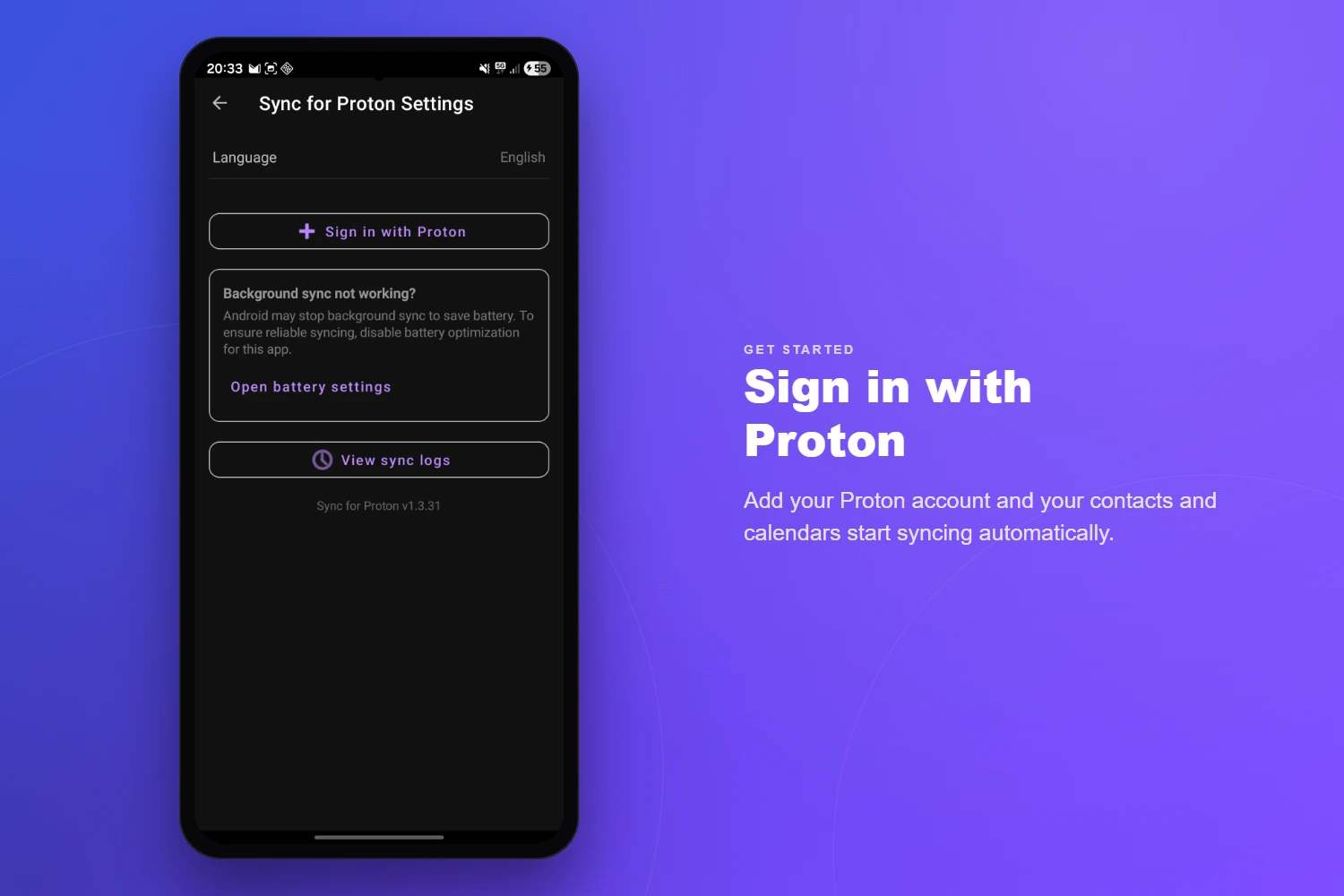
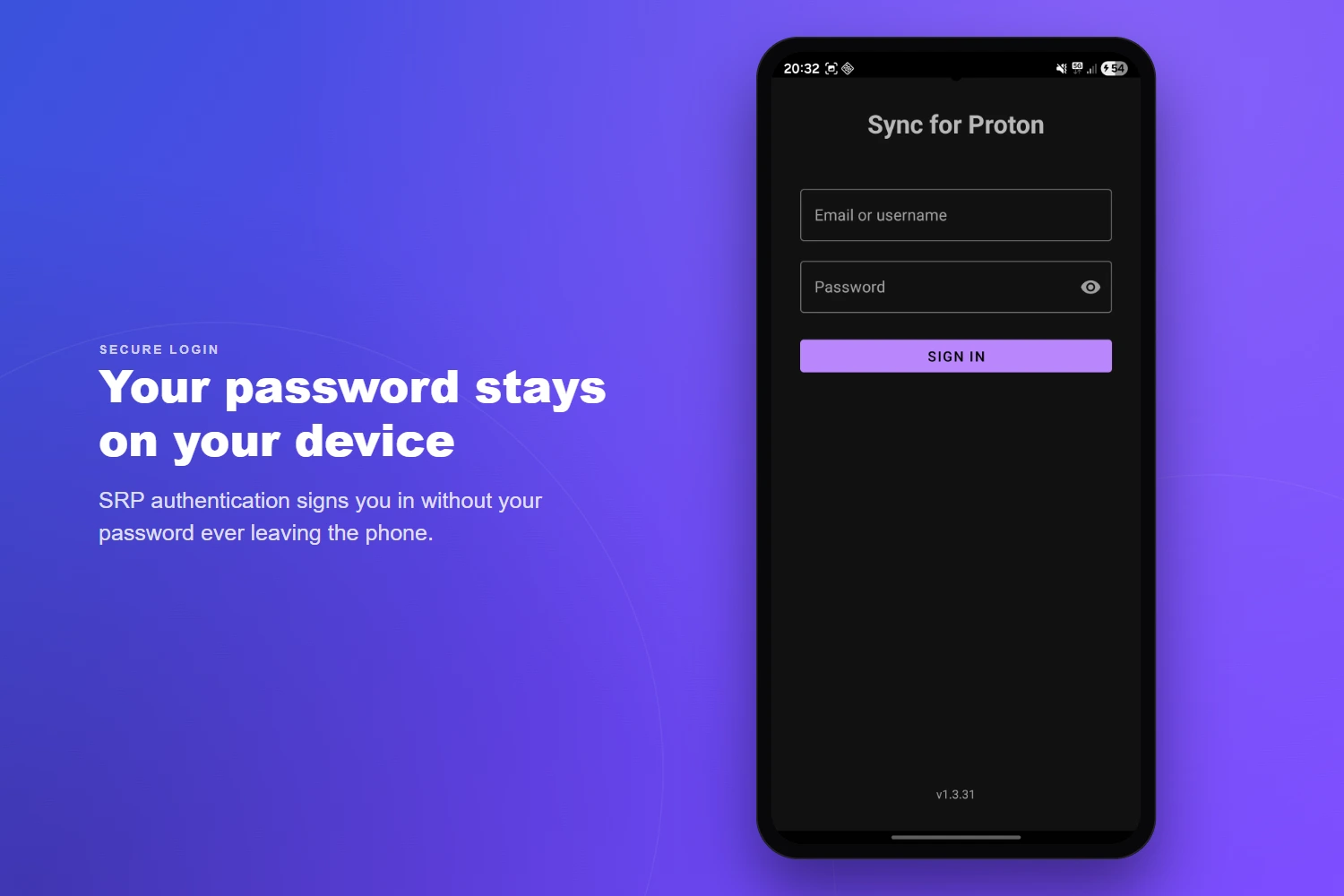
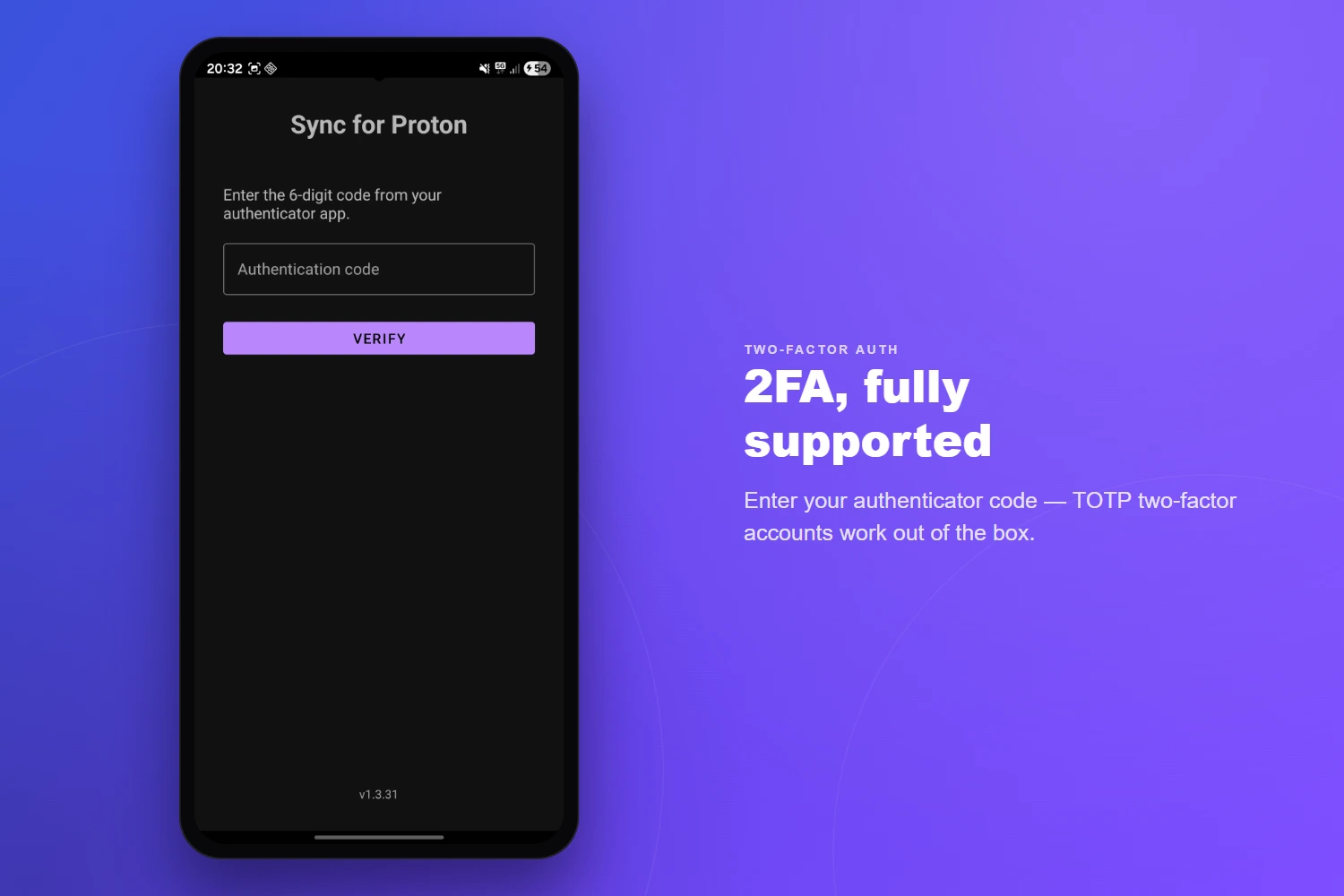
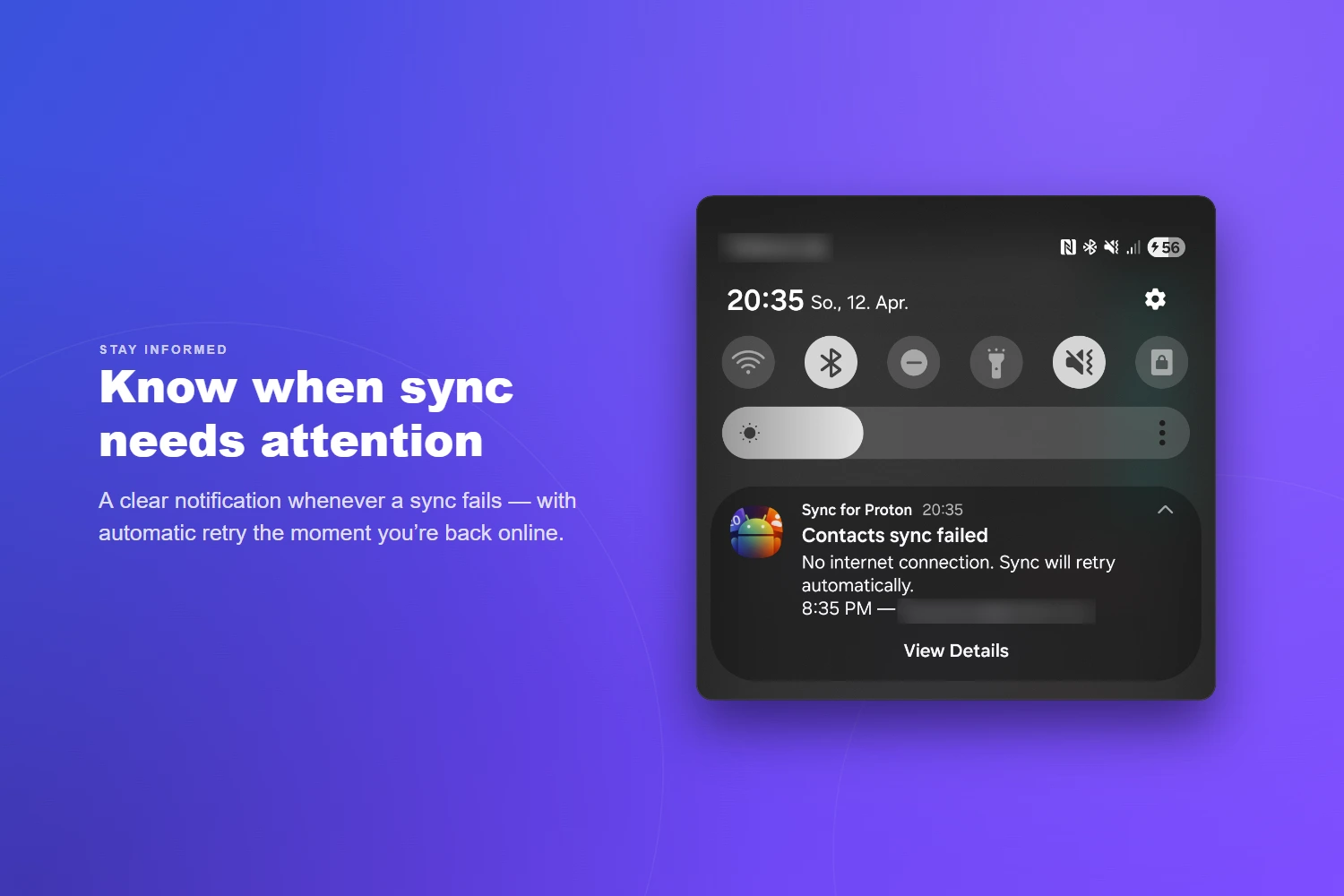
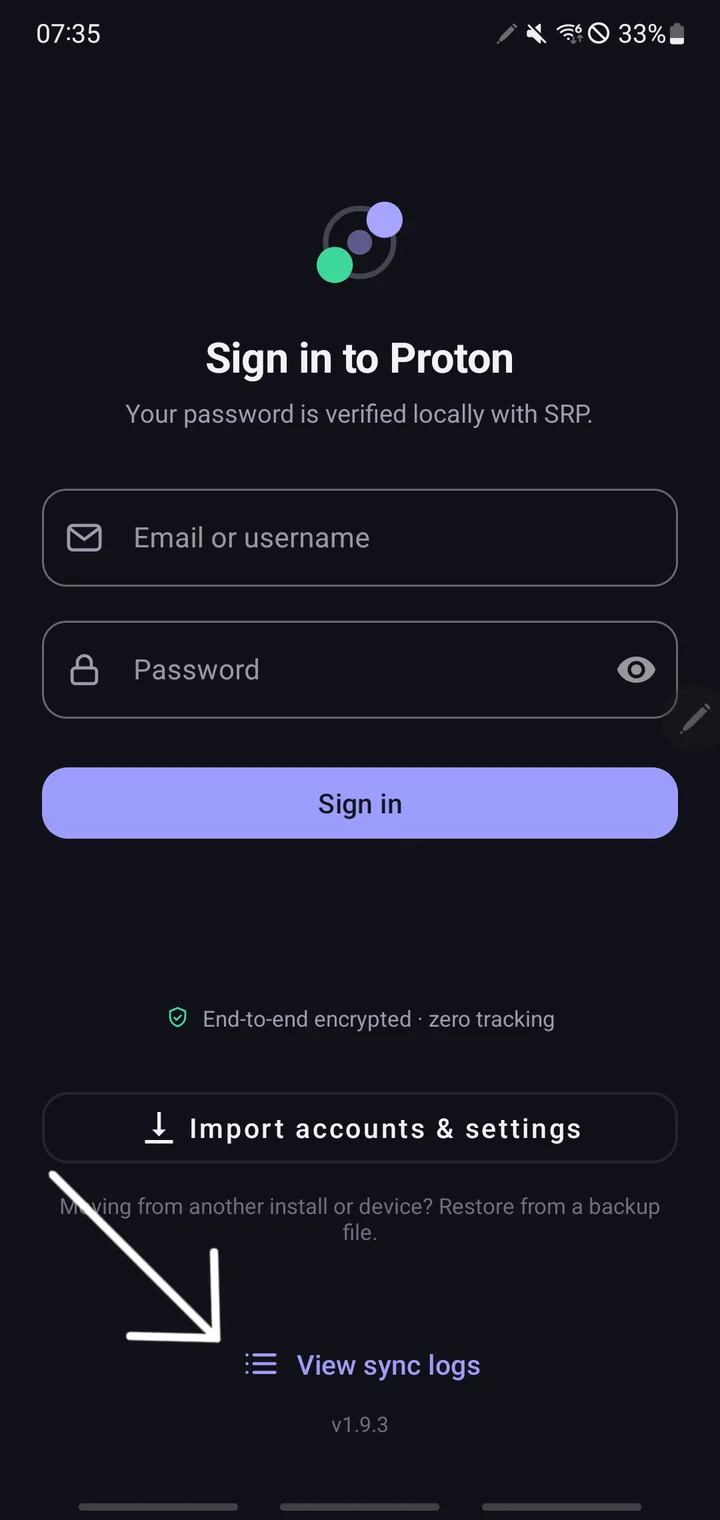
Yes, and you don’t have to take our word for it. Any app you type a password into, including Proton’s own apps, holds it in memory for that moment, and that is unavoidable. The question that matters is whether the app sends or stores it anywhere it should not, and you can check that from outside the app. Login uses Proton’s SRP protocol, so your password is never transmitted, not even to Proton. A proof is computed on your device and only that proof is sent. Your password is used only on your device, to build that proof and to unlock your Proton keys, and it is never saved to disk. Two-factor codes go only to Proton, and most of your contact and calendar data is end-to-end encrypted with your own Proton keys before it leaves your phone.
Your session tokens and key material are encrypted at rest on your device with a hardware-backed key. The app talks to Proton’s servers, plus, on the versions from outside Google Play (GitHub/Obtainium, Galaxy Store, Uptodown), a subscription check that receives your subscription ID and no account data. The one web page the app can load, Proton’s login verification, is limited to Proton’s domains and the hCaptcha challenge Proton uses. Up to version 1.11.4 the app also downloaded time-zone definitions from tzurl.org; from 1.11.5 it does so only if you switch on “Update time zones online”. The app has no analytics, tracking or crash-reporting tools of its own; the Google Play version contains Google’s billing library, which can send Google technical logs about purchases.
To check all of this yourself, the app uses no certificate pinning, so you can point a network proxy at it on a device you control and watch exactly what it sends, or scan the APK with a tool like Exodus Privacy for trackers. Sync for Proton is an independent app and is not affiliated with Proton. If you want to trust no third party at all, Proton’s official apps are the right choice. The source is not public, so the most reliable check is simply observing how the installed app behaves on your own device.